
Accelerating ERTMS Deployment: Strategic Signals from Rail Live 2025
ERTMS deployment strategy is no longer a purely technical issue. It has become a governance and infrastructure challenge at European scale.
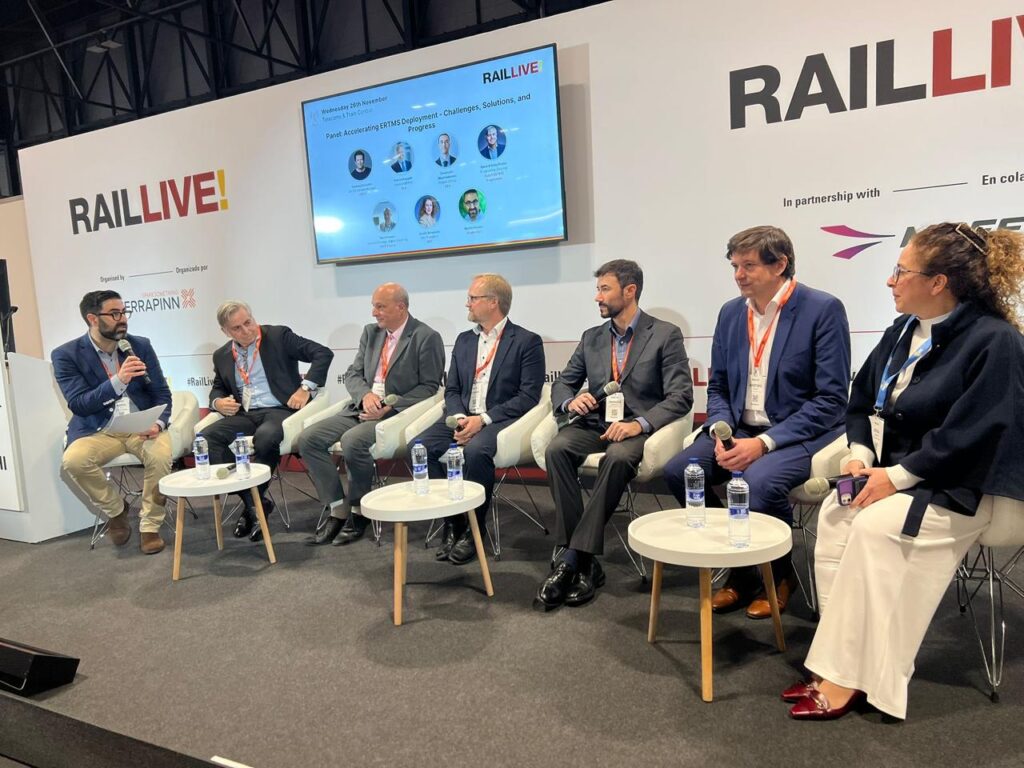
At Rail Live 2025, I participated as a panelist in the discussion “Accelerating ERTMS Deployment – Challenges, Solutions, and Progress,” alongside representatives from ERA, BLS AG, ERTMS Netherlands, UNISIG and SNCF Réseau.
The debate highlighted that accelerating ERTMS deployment requires more than technological progress. It demands a coherent governance framework aligning infrastructure managers, operators, suppliers and national authorities.
From National Projects to Cross-Border Integration
One of the key challenges remains fragmentation. Isolated national implementations risk limiting the full benefits of interoperability.
A successful ERTMS deployment strategy must move towards integrated, cross-border coordination. Interoperability is not only a regulatory objective — it directly influences network capacity, operational efficiency and safety performance.
Governance, Planning and Capital Discipline
Accelerating ERTMS also requires predictable planning and shared responsibilities. Without coordinated decision-making, investments risk underperforming or creating additional operational complexity.
Long-term infrastructure strategy must combine technical excellence with institutional alignment across Europe.
Rail Live 2025 confirmed that ERTMS deployment is ultimately a strategic governance issue — one that will shape the performance and competitiveness of the European rail system.