Introduction
As global rail markets become increasingly competitive, institutional alliances and industrial coordination are emerging as decisive factors for success beyond national borders. Nowhere is this more evident than in the Euro-Mediterranean space, where Europe and Africa’s transport ambitions increasingly converge.
Against this backdrop, Spain and Morocco’s rail cooperation is increasingly positioning themselves not only as neighbouring markets, but as complementary industrial and technological partners in the railway sector. The challenge is no longer connectivity alone, but the ability to structure competitive, export-oriented railway ecosystems.
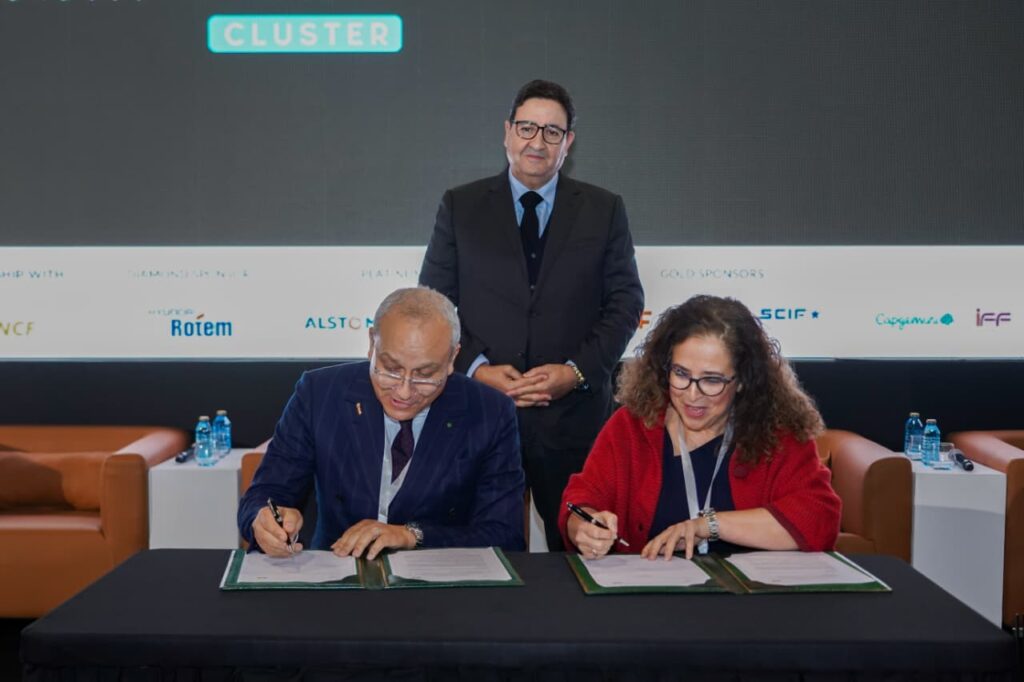
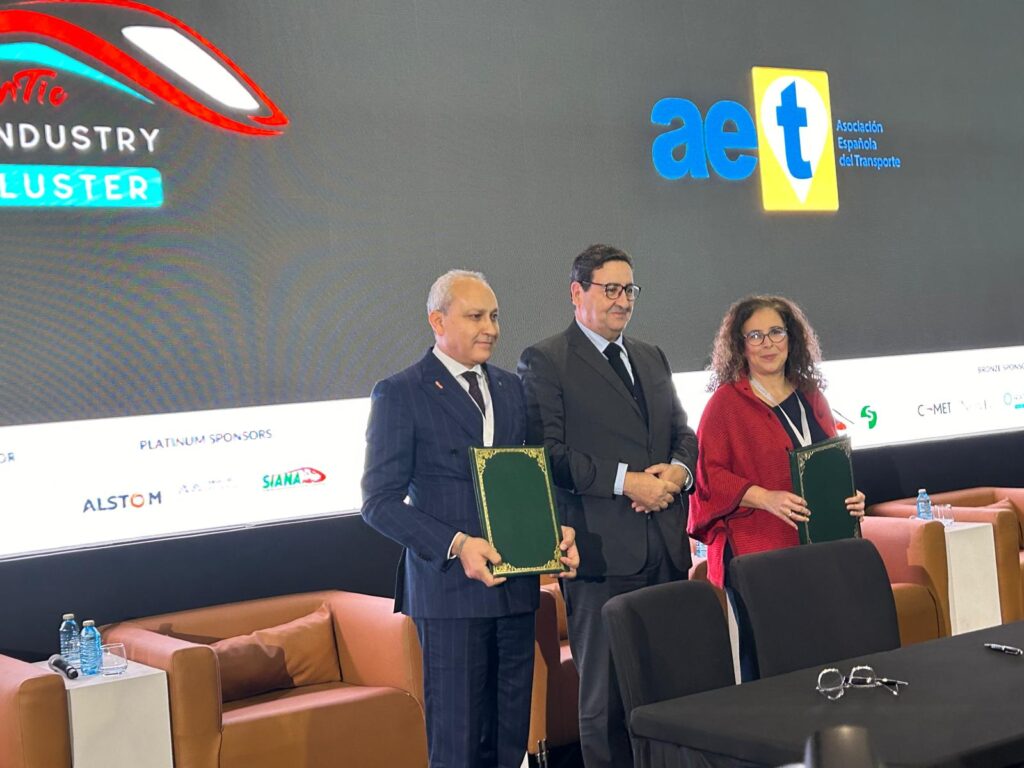
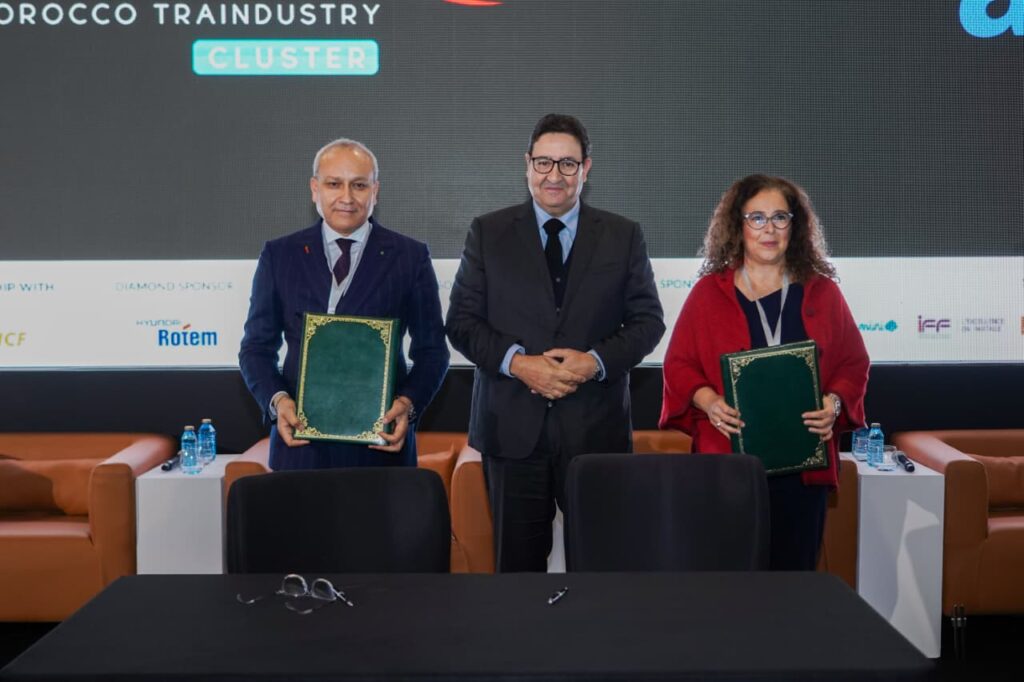
This strategic shift was clearly reflected during the Rail Industry Summit Morocco, where a high-impact cooperation agreement was signed between the Asociación Española del Transporte (AET) and the Morocco Train Industry Cluster (MTI) — an agreement I had the honour to sign on behalf of AET.
Participation Context
Event: Rail Industry Summit Morocco
Location & Date: El Jadida (Morocco), December 2025
Role: Signatory of the cooperation agreement on behalf of AET
The agreement was signed in the presence of H.E. Abdessamad Kayouh, Minister of Transport and Logistics of Morocco, reinforcing its strong institutional dimension.
The protocol was signed jointly with Mr Mohammed Smouni, President of the MTI Cluster and Deputy Director General of ONCF, underlining the alignment between industrial strategy and national rail governance.
Key Discussion Points
- Establishing a Euro-African railway industrial axis capable of competing in African, European and global markets
- Leveraging complementary strengths: Spain as an experienced international rail hub, Morocco as a fast-growing production and innovation platform
- Moving beyond cooperation towards structured industrial integration, joint bids and shared value chains
- Positioning rail not only as infrastructure, but as a strategic export industry
How Rail Cooperation Shapes Euro-Mediterranean Strategy
- Railway competitiveness is now ecosystem-driven
Structured clusters, institutional backing and coordinated value chains are becoming essential for winning large-scale international contracts. - Spain–Morocco is a natural industrial corridor
Geographic proximity, logistics connectivity and complementary capabilities create a unique platform linking Europe and Africa. - Institutional alignment accelerates market credibility
The presence of public authorities and national operators significantly strengthens international positioning and investor confidence. - Talent, innovation and industrial capacity must move together
Technology transfer, executive training and industrial cooperation are inseparable levers for sustainable competitiveness.