
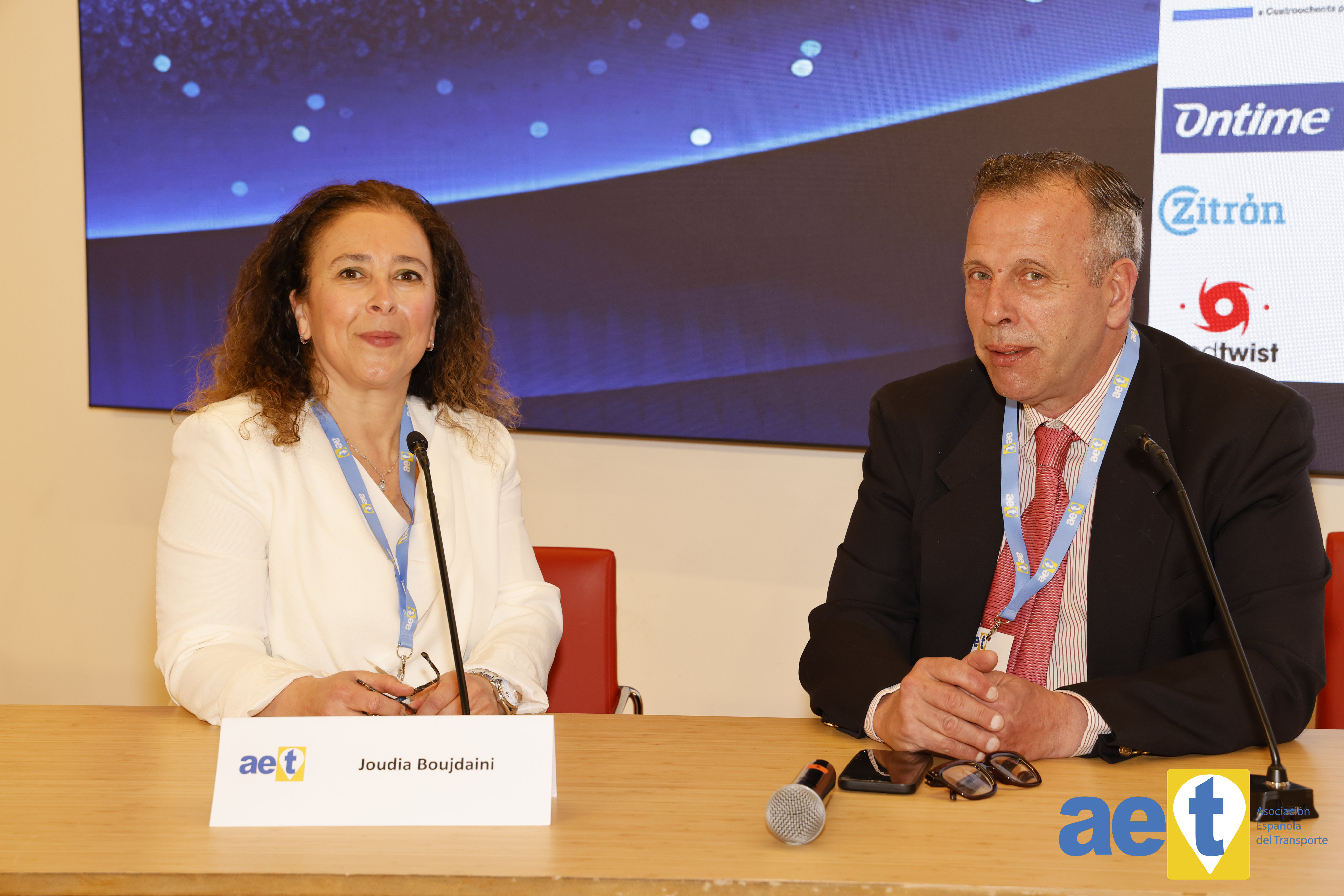
Madrid hosted the IV Congress of the Spanish Transport Association on April 8 and 9. This critical event brought together industry leaders. They addressed one central question: Who leads change in an era of rapid transformation?
TecFuturo published a comprehensive chronicle of the Congress. This publication includes an in-depth interview where I shared insights on sector challenges. The exchange addresses the most pressing strategic issues we face today.
A Sector at the Crossroads
The Congress addressed challenges beyond operational efficiency. Three forces reshape the competitive landscape. First, geopolitical shifts matter profoundly. Second, Artificial Intelligence transforms how we work. Third, the need for shared governance has become urgent. Together, these forces demand new approaches. Technology is no longer optional—it now forms the backbone of international competitiveness.
In one roundtable, leaders discussed “How Does the New Context Impact Business Competitiveness?” The consensus was clear. The real differentiator is not production capacity. Rather, organizations that adapt quickly to uncertainty win. Agility matters. Flexibility matters. Resilience matters.
Three Pillars for Leadership in Change
During my intervention at the Congress, I emphasized three dimensions. These dimensions help organizations survive and lead. They are critical for navigating what comes next.
Data as a Critical Asset. AI is already solving complex infrastructure problems. Yet the real objective differs from what many think. We must not improve in isolation. Instead, we should share that knowledge. Building common progress matters most. Technology serves as a tool for unity. It creates shared growth across organizations and ecosystems.
Resilience Through Multi-Scenario Planning
Geopolitical shifts follow cycles. Crises also open new opportunities. Therefore, organizations need a strategic approach. The key strategy? Work with Plan A, Plan B, and Plan C. Optimism alone fails. Instead, we must investigate continuously. We must critique our assumptions. We must stay current with technology. Only then do we remain competitive. This framework protects against uncertainty.
Shared Governance as the Solution
Today’s market splits between very large and very small enterprises. The middle disappears. The path to survival requires institutional curiosity. Moreover, collaboration becomes essential. Corporate actors alone cannot lead change. Institutions alone cannot either. Finally, all stakeholders must share leadership responsibilities. This distribution of power matters.
Why Shared Governance Matters Now
Stable environments favor hierarchical structures. However, our sector faces simultaneous disruptions. Regulations change constantly. Technology accelerates monthly. Geopolitical uncertainty rises yearly. In this context, organizations need diverse perspectives. They require decision-making frameworks that distribute responsibility. This approach matters because isolated decisions cannot compete with collective wisdom.
This is not soft leadership. Rather, it is pragmatic leadership. When regulators face the same pressures as operators, technology providers, and logistics firms, their combined intelligence solves problems better. Collective insight beats individual judgment.
Data and AI as Competitive Drivers
Artificial Intelligence in 2026 is not a competitive advantage. Instead, it sets the baseline. Every serious player uses AI. So what creates real advantage? Smart application of data and AI to solve sector-wide problems. Individual company problems matter less than ecosystem problems.
This requires a new approach to knowledge sharing. Traditionally, organizations guard data as proprietary assets. Forward-thinking firms ask differently. They ask: How can we use AI to identify inefficiencies that benefit everyone? How do we all improve margins together? These questions signal maturity.
From Congress to Action
The IV AET Congress was more than discussion. It constituted a call to action. Day two included a voting exercise. Sector leaders voted anonymously on who should lead change. Should companies lead? Should institutions? Should governance be shared? The results reflected sector priorities clearly. Shared governance won support.
At JBS International Advisory, we work at this intersection daily. We focus on institutional strategy. We advance technological innovation. We build stakeholder alignment. The opportunity exists. The question becomes: Will the transport and logistics sector act on it?
TecFuturo published the full interview. The publication explores these themes in depth and nuance.
About JBS International Advisory: Provides strategic, technical and international advisory for transport, logistics and trade ecosystems. Expertise in EU funding and regulatory advisory, rail transport and logistics strategy for infrastructure and supply chains, and international trade and strategic partnerships across global markets.