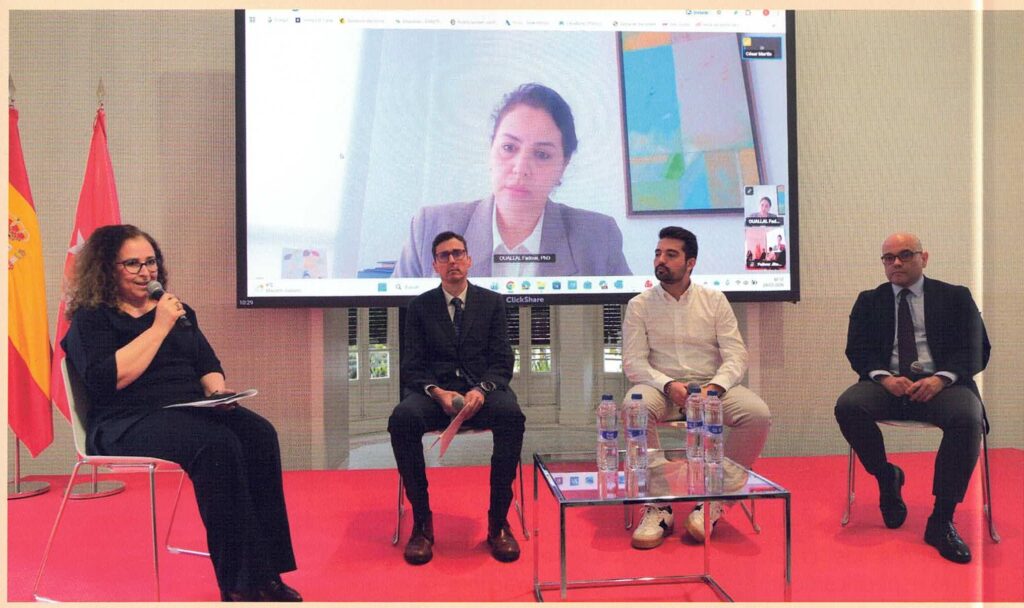
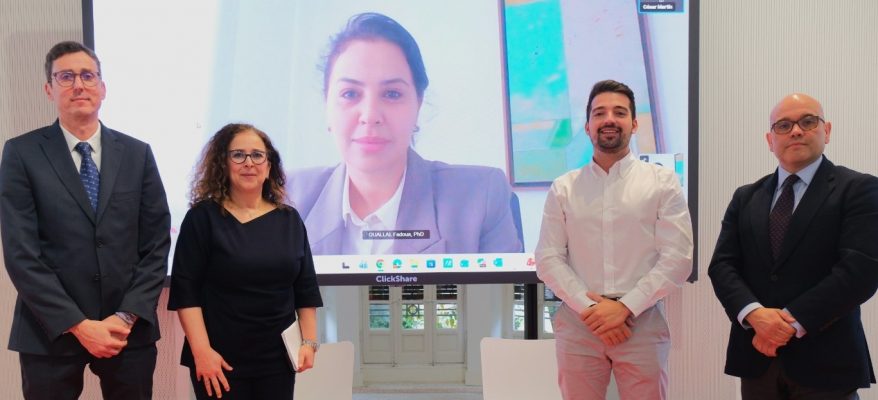
In March 2026 I moderated the roundtable “Morocco, a Close Market of Emerging Opportunities” at the conference “Logistics on the Move in a Turbulent World”, organised in Madrid by El Canal Marítimo y Logístico. At the time I took part as Vice President of the Spanish Transport Association (AET). The event was covered in the March/April 2026 issue of El Canal magazine.
The panel brought together MedHub–Tanger Med, the Moroccan Investment and Export Development Agency (AMDIE) and two Spanish operators with long experience in Morocco, Suardiaz Group and Calsina Carré. The question in the room was simple: is Morocco a threat or a partner for Spanish logistics?
A corridor that now runs both ways
For decades, Spain–Morocco logistics was mostly a north–south flow. That has changed. Port investment and Morocco’s growing industrial base have turned the Strait into a two-way corridor. Goods now move south to north as well, and operators who have worked in Morocco for thirty years describe a far more balanced relationship than when they started.
Morocco produces, Spain distributes
The strongest conclusion of the session was about industry. As Moroccan production grows, some manufacturing is moving closer to Europe from distant markets such as China. Morocco gains appeal as a nearshoring location, and Spain strengthens its role as the distribution platform into Europe. Seen this way, Spain Morocco logistics is not a zero-sum game. Each side’s growth feeds the other.
Ports as the engine
Tanger Med, now two decades in operation, was presented as the reference case. The panel also noted that Tanger Med will take on the management of the new Nador port, with the aim of repeating that trajectory, and that the future Atlantic port of Dakhla already has priority sectors identified. AMDIE outlined the incentives and support Morocco offers investors, with Calsina Carré as an example of a successful establishment.
What still needs work
The discussion was not uncritical. Customs procedures remain a bottleneck. Morocco has introduced a digital platform and the customs administration is working on it, but trade is growing faster than processes are being simplified.
My take
A second roundtable that day, led by Puertos del Estado with the port authorities of Valencia, Tarragona, Santander, Bilbao, Barcelona and Vigo, looked at the same disruption from the Spanish ports’ side. Together, the two debates confirmed what I believe about the Strait: the right question is not “will Morocco take our traffic?” but “how do we build a corridor where both shores gain position against other regions of the world?”
I developed this idea further in my op-ed in elEconomista, Competition or Complementarity? What Moroccan Souks Teach Us About Port Strategy.
Read the full chronicle of the roundtable on the AET website (in Spanish).
See also: Spain–Morocco Railway Cooperation: the AET–MTI agreement.